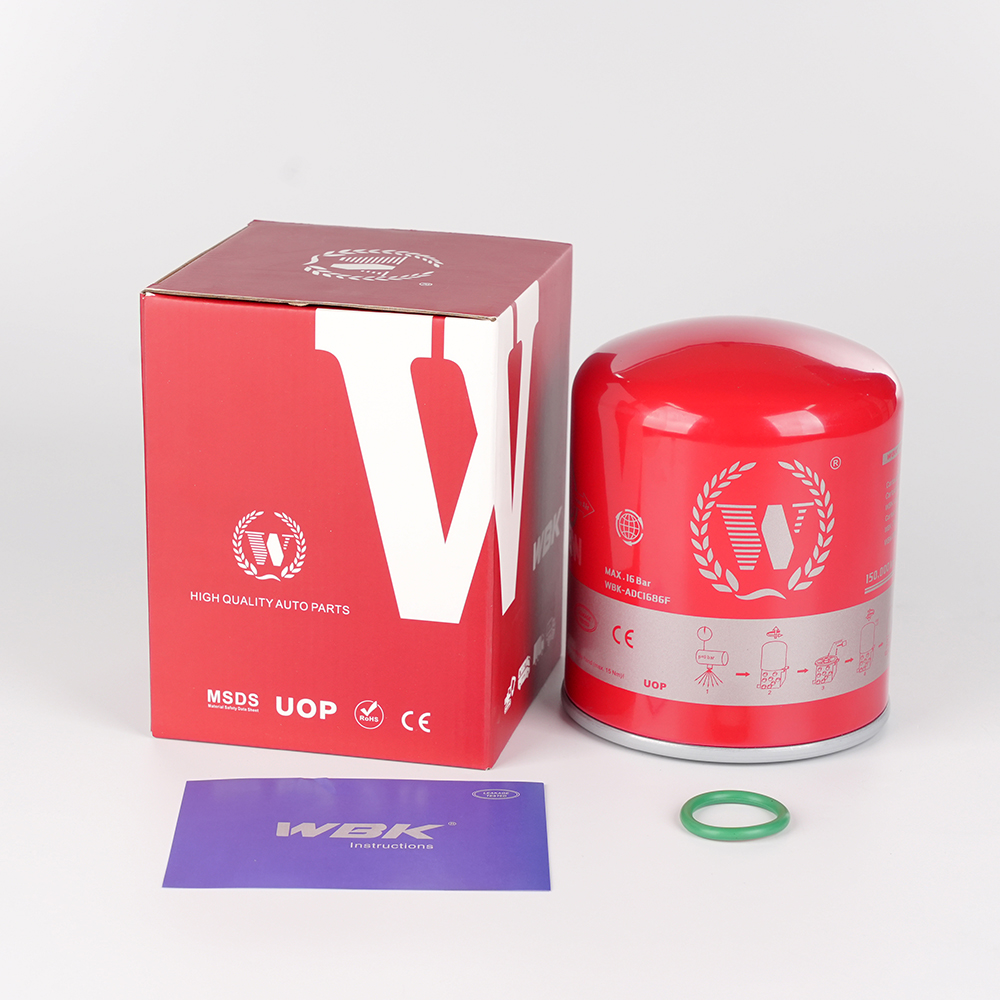

QTY.:8PCS
G.W.:21KGS
N.W.:20KGS
MEAS:60x30x19.5 CM
Inner box:14.2x14.2x18.4
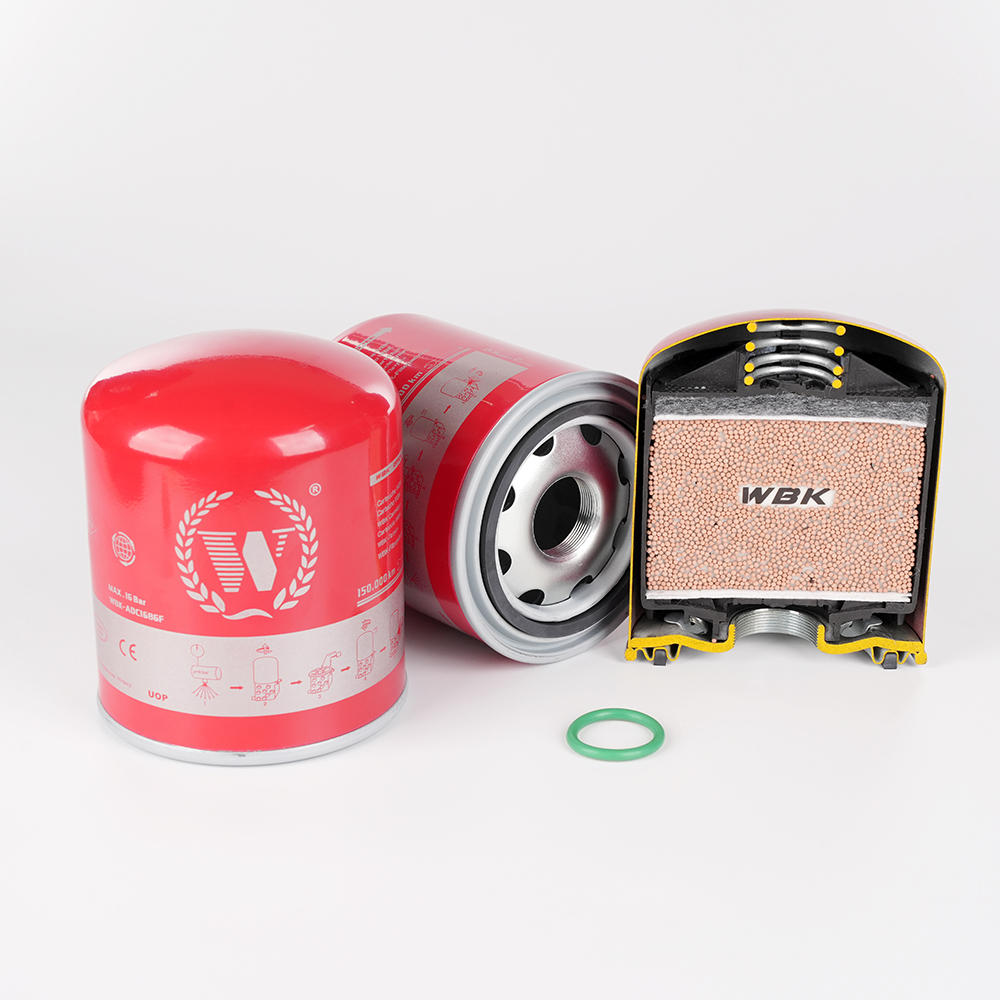
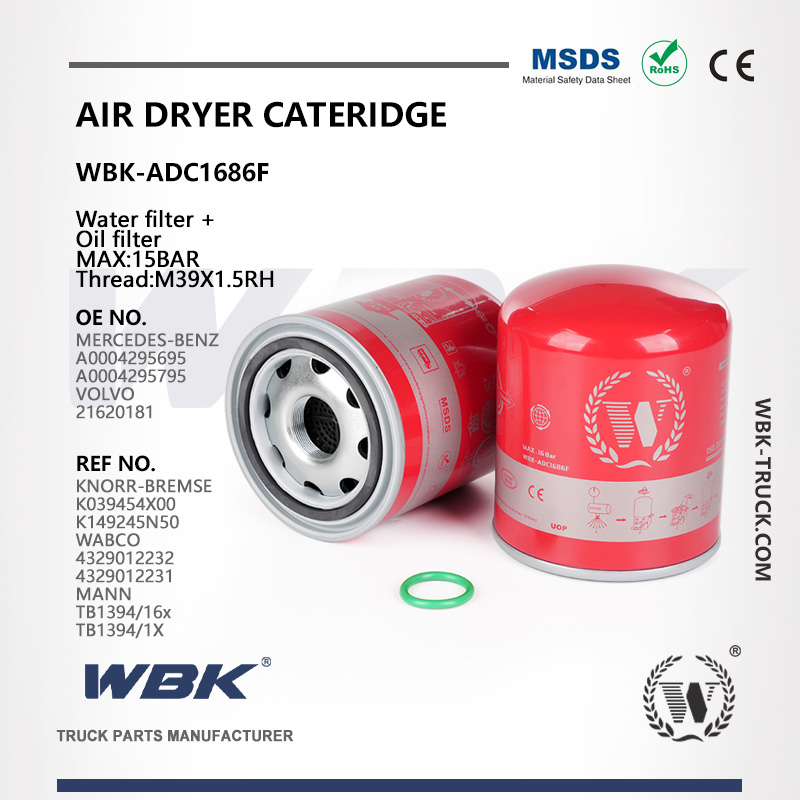
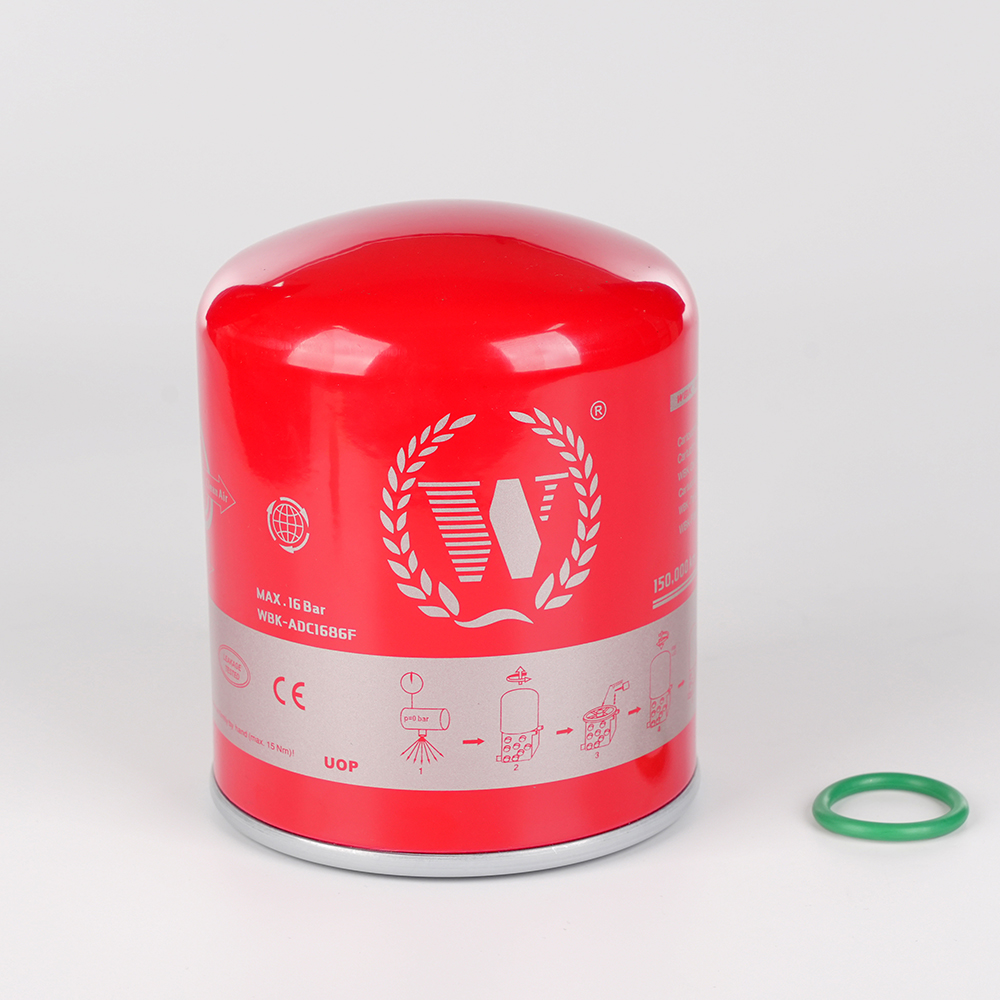
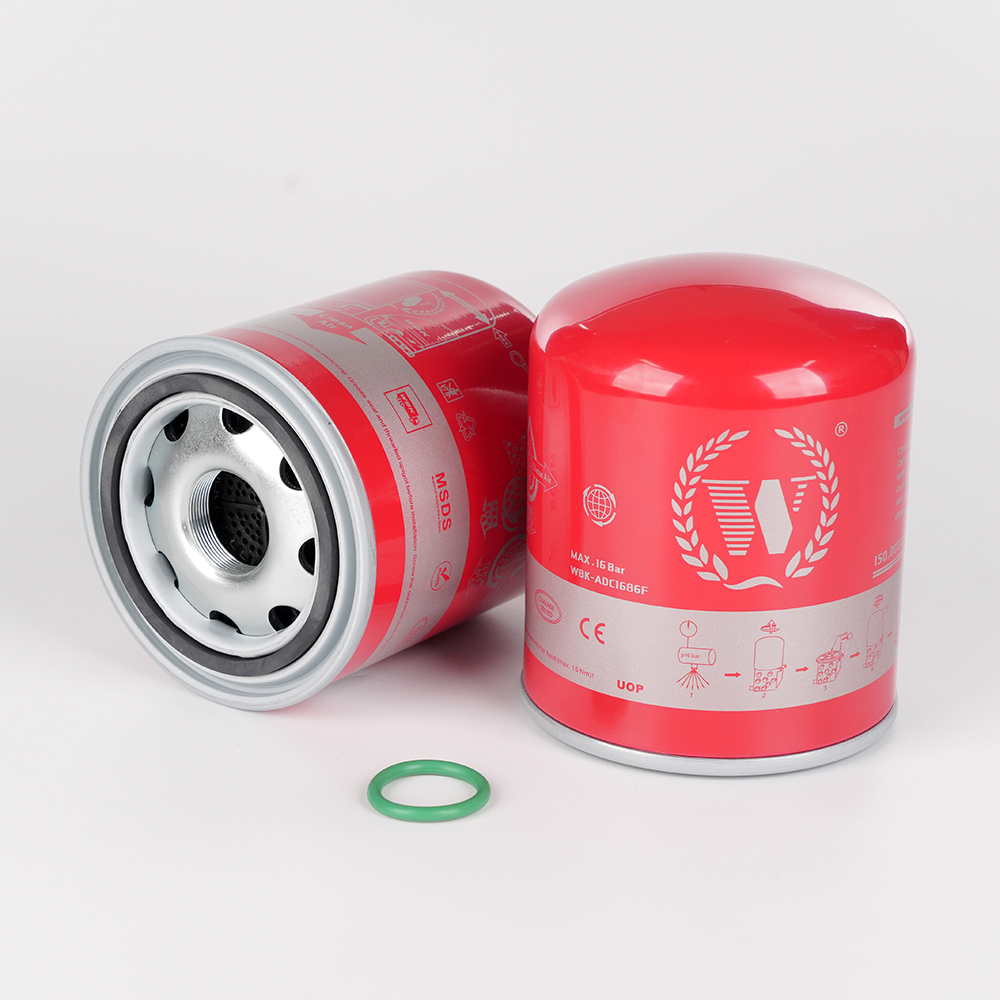
WBK-ADC1686F
DAF 1782420
DAF 1872122
DAF 1506635
MAN 81.521.08-6025
MAN 81.521.55-0040
MAN 81.52155-0042
MAN 81.52155-0041
BENZ A 000 429 56 95
BENZ A 000 429 57 95
BENZ 884 048 33 82
BENZ A884 048 33 82
BENZ 000 429 56 95
BENZ 000 429 57 95
RENAULT TRUCKS 50 01 865 037
VOLVO 20 972 915
VOLVO 20557234
VOLVO 21 508 133
VOLVO 21 620 181
HYUNDAI 595538C510
HYUNDAI 595538D002
4329012232
4329012231
4329211002
4329211012
4329211042
K039454X00
K149245N50
TB1394/16x
TB1394/1X
T280W
K009460
K003776
P951413
AL 24
SP1950
SP1963
BA5592
BA5379
0986628254
244265
AD785/4 4329012472
AD27747
AC60010
60060965
1. What Is an Air Dryer Filter
An air dryer filter is a critical component in compressed air systems designed to remove moisture, oil, and solid contaminants from compressed air. It is typically used alongside an air dryer, which reduces the moisture content by cooling or adsorption, while the filter removes residual particles and oil aerosols. The combined function ensures that the compressed air delivered to downstream equipment is clean, dry, and suitable for industrial processes. Air dryer filters are essential in maintaining air quality standards, protecting equipment, and ensuring efficient system operation. They are widely used in various industries where compressed air is a key utility.
2. Why the Air Dryer Filter Matters
Compressed air naturally contains water vapor, oil residues, and solid particles that can negatively impact system performance. An air dryer filter is important because it prevents these contaminants from reaching downstream equipment and processes. Moisture can cause corrosion and rust, while oil and particles can clog valves and damage sensitive components. By removing these impurities, air dryer filters help improve reliability, reduce maintenance costs, and extend equipment lifespan. In industries where product quality is critical, such as food processing and pharmaceuticals, clean and dry air is essential to avoid contamination and meet regulatory standards.
3. Common Product Types by Air Dryer Filter
Air dryer filters are available in several types, each designed for specific filtration needs. Particulate filters remove solid particles like dust and rust, while coalescing filters capture oil aerosols and fine water droplets. Activated carbon filters are used to remove oil vapors and odors. High-efficiency filters provide ultra-clean air for sensitive applications. These filters can be used individually or in multi-stage systems for enhanced performance. Additionally, filters can be configured as inline units for compact installations or as modular systems for larger industrial setups. The choice of filter type depends on the required air quality and operating conditions.
4. Key Advantages of Air Dryer Filter
Air dryer filters offer numerous advantages, including improved air quality, enhanced system reliability, and reduced maintenance requirements. By removing moisture and contaminants, they help prevent corrosion and wear in equipment, extending its service life. They also improve energy efficiency by maintaining optimal airflow and reducing pressure drops. In addition, these filters contribute to consistent product quality by eliminating contamination risks. Their modular design allows for easy integration and scalability, while their relatively simple maintenance requirements make them cost-effective. Overall, air dryer filters are essential for ensuring efficient and safe operation of compressed air systems.
5. Air Dryer Filter Machine Structure and Core Stations
An air dryer filter system typically consists of a durable housing, filter elements, and supporting components. The housing is designed to withstand high pressure and is often made from materials like aluminum or steel. The filter element is the core component, responsible for trapping contaminants using specialized media. The system includes an inlet and outlet to direct airflow, as well as seals and gaskets to ensure airtight operation. A drainage system is used to remove collected moisture and oil. Some systems also include pressure indicators or sensors to monitor performance and signal when maintenance is required.
6. Key Features of an Air Dryer Filter
Key features of an air dryer filter include high filtration efficiency, low pressure drop, and durable construction. These filters are designed to handle a wide range of operating conditions, including varying pressures and temperatures. Many models feature multi-stage filtration for enhanced performance, combining different types of filter media. Automatic or manual drains ensure efficient removal of collected liquids. Easy maintenance is another important feature, with replaceable filter elements and accessible housings. Additionally, compact and modular designs allow for flexible installation in different system configurations, making them suitable for diverse industrial applications.
7. Air Dryer Filter Material Compatibility
Air dryer filters are constructed from materials chosen for their strength, durability, and compatibility with compressed air systems. The housing is typically made from aluminum, carbon steel, or stainless steel, depending on the operating environment and corrosion resistance requirements. Filter elements may use materials such as fiberglass, synthetic fibers, or activated carbon, depending on the type of contaminants being removed. These materials are designed to withstand exposure to moisture, oil, and varying temperatures without degradation. Proper material compatibility ensures reliable performance, long service life, and suitability for different industrial environments.
8. Air Dryer Filter Product Applications
Air dryer filters are used in a wide range of industries where clean and dry compressed air is essential. In manufacturing, they protect machinery and pneumatic tools from contamination. In the food and beverage industry, they help maintain hygiene standards by ensuring clean air in processing and packaging. Pharmaceutical and medical applications rely on these filters to meet strict cleanliness requirements. They are also used in electronics manufacturing, automotive painting, and chemical processing. Additionally, air dryer filters are important in general industrial systems, where they improve efficiency and reduce maintenance needs.
9. How a Refrigerated Air Dryer Filter Works
A refrigerated air dryer filter works by combining cooling and filtration processes to remove moisture and contaminants from compressed air. First, warm compressed air enters the system and passes through a heat exchanger, where it is pre-cooled by outgoing cold air. It then enters the evaporator, where refrigeration lowers the temperature further, causing water vapor to condense into liquid. This condensed water is separated and removed באמצעות a drain system. The air is then reheated slightly to prevent condensation in downstream piping. Finally, it passes through a filter that removes any remaining particles and oil droplets, delivering clean and dry air.
10. How to Clean and Maintain Air Dryer Filter Effectively
Proper cleaning and maintenance of an air dryer filter are essential for ensuring long-term performance and efficiency. Regular inspection of filter elements is necessary to detect clogging or wear, and elements should be replaced as needed. Drain systems must be checked to ensure effective removal of accumulated moisture and oil. Cleaning of the housing and internal components helps prevent buildup of contaminants. Monitoring pressure drop across the filter provides an indication of when maintenance is required. It is also important to inspect seals and connections for leaks. Routine maintenance not only extends the lifespan of the filter but also ensures consistent air quality and system reliability.

Having a problem with the product? Give us a call or chat online.
+86-577-65636687
400-000-1687
wbacc@foxmail.com
amber@rakeno.com